Am I Jewish? Signs of Hidden Jewish Ancestry
Wondering 'am I Jewish?' Explore the common signs of hidden Jewish ancestry in surnames, family customs, and history, and how to research your roots.
«Am I Jewish?» is a question thousands of families across Latin America and Iberia ask quietly, usually after noticing something about their own household that never quite made sense. Here are the signs people most often report, what they may indicate — and, just as importantly, what they don't.
Why families ask
The question rarely starts with a document. It starts with a memory: a grandmother lighting two candles on Friday at dusk in a closed room; an aunt insisting the family «doesn't eat that»; a fast day nobody could name. For descendants of Spain and Portugal's forced converts, the reasons behind such habits were deliberately forgotten — that was how families survived the Inquisition — while the habits themselves were passed down as «just what we do.»
Signs people most often report
- Friday-night candles. Lit at sundown, sometimes in a cellar or back room, with no religious explanation attached.
- Avoiding pork or shellfish. Framed as taste, allergy, or family habit rather than religion.
- Covering mirrors after a death. A Jewish mourning practice that appears in some families with no other explanation.
- A fast in the autumn. An unexplained day of fasting or quiet reflection falling near the same time each year — often, unknowingly, close to Yom Kippur.
- Sweeping toward the centre of the room. Reported in some descendant families, and variously explained.
- Rapid burial, washing the body, no flowers. Funeral customs closer to Jewish practice than to local Catholic norms.
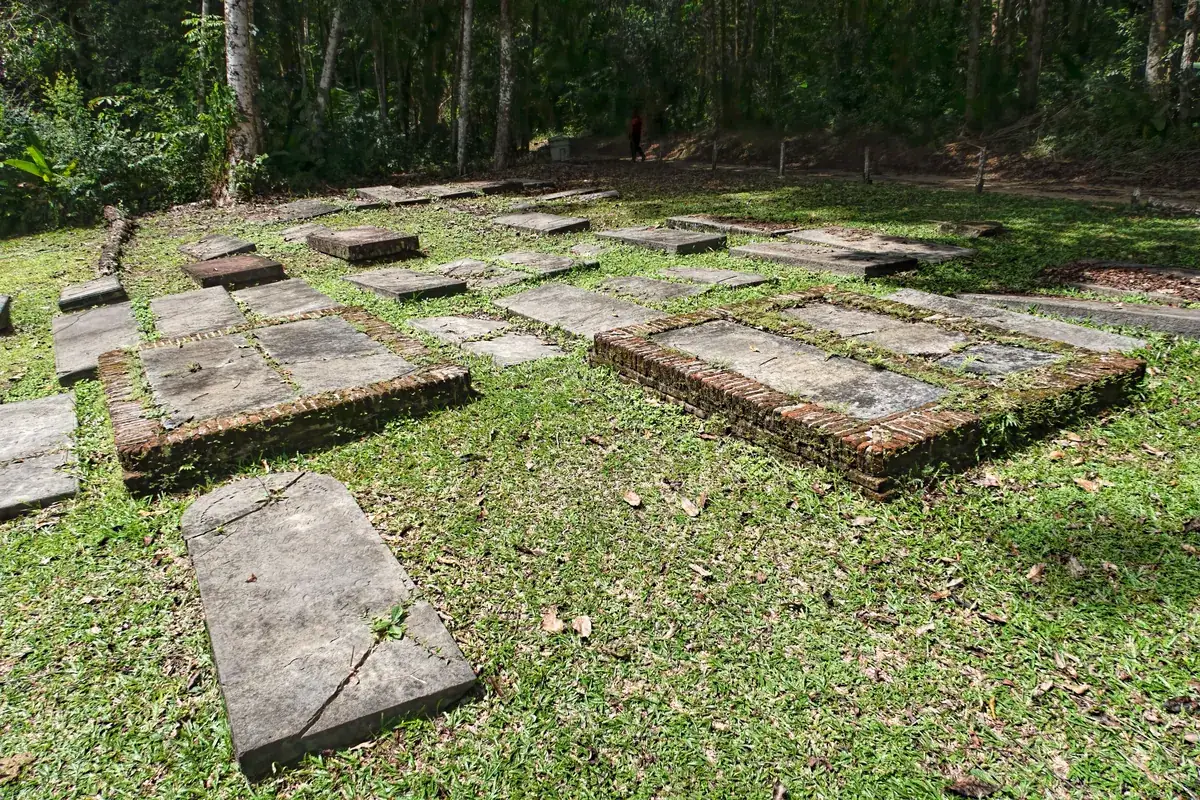
- Six-pointed stars. Carved discreetly into old headstones, doorframes, or family Bibles.
- A converso surname, or Ladino words folded into the family's Spanish or Portuguese.
- Marrying within a small circle of a few families, over generations.
- A family sense of being «different,» or a story that the family «came from somewhere else.»
What these signs do not prove
This is the part most pages leave out, and it matters. Several of these customs have perfectly ordinary alternative explanations. Covering mirrors and avoiding certain foods appear in folk Catholic traditions across the Mediterranean and Latin America with no Jewish connection whatsoever. Scholars — most prominently the folklorist Judith Neulander — have argued that some customs cited as crypto-Jewish evidence in the American Southwest have other origins entirely, including Protestant missionary influence, and that expectation can shape memory once a family suspects a Jewish past.
That critique is contested, and other researchers have documented genuine continuity. The honest position is the careful one: a single custom proves nothing. A cluster of them, in a family from a region with a documented converso presence, carrying a converso surname, is a different matter — and worth investigating properly.
What to do next
Write down what you actually remember, before it is lost: who did what, in which town, and when. Then work outward into records and research. A DNA test can add one more signal to that picture — it is not a verdict on who you are, and it cannot make you Jewish or not Jewish. Identity is not decided by a laboratory.
Frequently asked questions
Am I Jewish if my family lit candles on Friday?
Not on its own. It is one of the most frequently reported signs of a crypto-Jewish past, but it needs corroboration — surnames, region, records, other customs — before it means anything definite.
What are the signs of hidden Jewish ancestry?
Most commonly: Friday-night candles, avoiding pork, covering mirrors in mourning, an unexplained autumn fast, rapid burial customs, six-pointed stars on old graves, converso surnames, and marriage within a small circle of families.
Can a DNA test tell me if I am Jewish?
No. It can indicate genetic ancestry associated with Jewish populations, but Jewish status is a question of religious law and documentation, not genetics.
Do these customs always mean a Jewish past?
No. Some have entirely separate origins in local folk Catholic tradition, and researchers actively debate several of them. Weight of evidence matters more than any single sign.