Crypto-Jewish Customs That Survived the Inquisition
Friday-night candles, covered mirrors, avoiding pork: the hidden crypto-Jewish customs that Sephardic Anusim families carried in secret for twenty generations.
To survive the Inquisition, crypto-Jewish families had to strip their Judaism down to whatever could be practised behind a closed door and explained away if a neighbour asked. What survived was not the religion intact, but fragments of it — habits detached from their reasons, handed down for twenty generations as «something we have always done.»
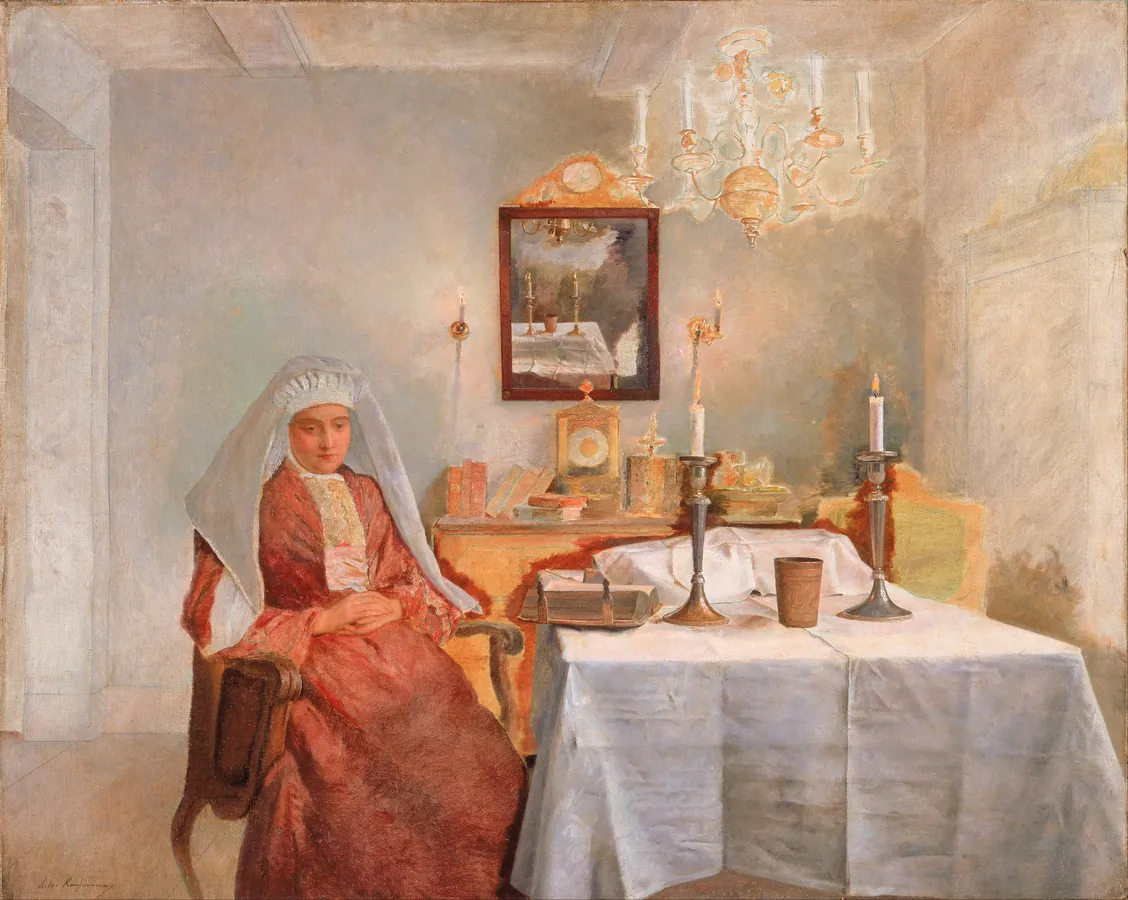
Lighting candles on Friday at dusk
The most widely reported custom of all. In Jewish practice, two candles are lit before sunset on Friday to welcome the Sabbath. Among crypto-Jewish families the same act persisted, moved somewhere it could not be seen — a cellar, a wardrobe, a windowless back room — and stripped of any blessing that could incriminate. Inquisition testimony repeatedly cites clean linen and lit candles on Friday evening as evidence of Judaizing, which tells you both how common the practice was and how dangerous.
Avoiding pork and shellfish
Kashrut forbids pork and shellfish. In a society where eating pork publicly was a demonstration of Christian sincerity — and where refusing it could get you denounced — families developed a repertoire of excuses that outlived the reason: it disagrees with us, we never cared for it, it is not to our taste. The word «marrano» itself, meaning swine, was a taunt aimed precisely at this.
Mourning and burial
Jewish mourning practice is distinctive: the body is washed and buried quickly and simply, mirrors are covered in the house of mourning, the family sits low for seven days. Descendant families have reported covering mirrors after a death, burying without embalming or flowers, washing the body themselves, and pouring out standing water — each explained, when explained at all, as respect for the dead.
The autumn fast
Yom Kippur, the Day of Atonement, is the most solemn day of the Jewish year. Families have reported an inherited day of fasting and quiet in the autumn with no name attached to it and no place in the Catholic calendar — sometimes deliberately shifted by a day or two, a documented crypto-Jewish tactic to avoid falling on the date the Inquisition would be watching.
Sweeping toward the centre of the room
Frequently cited, and genuinely uncertain. The usual explanation is a reluctance to sweep dirt out past the doorway — where a mezuzah once hung. It is a good example of a custom whose crypto-Jewish origin is plausible but not established.
Marks in stone and fragments of language
Six-pointed stars appear discreetly carved on old headstones and doorframes across the Iberian world and Latin America — though the hexagram was also a common decorative and protective motif in Christian and Islamic art, so it is weak evidence on its own. Stronger, and quieter, are the linguistic traces: scattered Ladino words inside family Spanish or Portuguese, and old Sephardic surnames carried without anyone recalling their origin.
A necessary word of caution
This field has a real scholarly debate running through it, and any honest page has to say so. Researchers including the folklorist Judith Neulander have argued that several customs presented as crypto-Jewish survivals — particularly in the American Southwest — may have other sources, including Protestant missionary activity, and that once a family suspects a Jewish past, ordinary habits get reinterpreted to fit. Other scholars have documented genuine, traceable continuity.
Both things are true at once: crypto-Judaism was real and is historically documented in Inquisition archives, and not every family custom that resembles it descends from it. Treat these customs as evidence to be weighed alongside records, surnames, and regional history — never as proof standing alone.
Frequently asked questions
What are crypto-Jewish customs?
Fragments of Jewish practice kept in secret by families forced to convert to Christianity in Spain and Portugal — lighting candles on Friday, avoiding pork, distinctive mourning and burial customs, and an unexplained autumn fast among them.
Why did crypto-Jews light candles in a cellar?
Because visible Sabbath candles were treated by the Inquisition as evidence of Judaizing. Hiding the light was how the practice survived.
Do these customs prove a family was Jewish?
No. Several have alternative origins in folk Catholic tradition, and the scholarship is actively debated. They carry weight only in combination with other evidence.
Why would a family fast a day after Yom Kippur?
Shifting the fast by a day or two is a documented crypto-Jewish tactic: observing on the exact known date was precisely when informers and inquisitors were paying attention.