Sephardic Jews: History, Diaspora and Descendants
Who are the Sephardic Jews? Their history from medieval Iberia through the 1492 expulsion to today's global diaspora, and the hidden descendants of the Anusim.
Sephardic Jews — the Jews of Sepharad, the Hebrew name for the Iberian Peninsula — built one of the richest Jewish civilisations in history over the course of a thousand years in Spain and Portugal. In 1492 that world was broken apart. Their descendants are scattered across the globe today, and a great many of them, especially across Latin America, have no idea that is who they are.
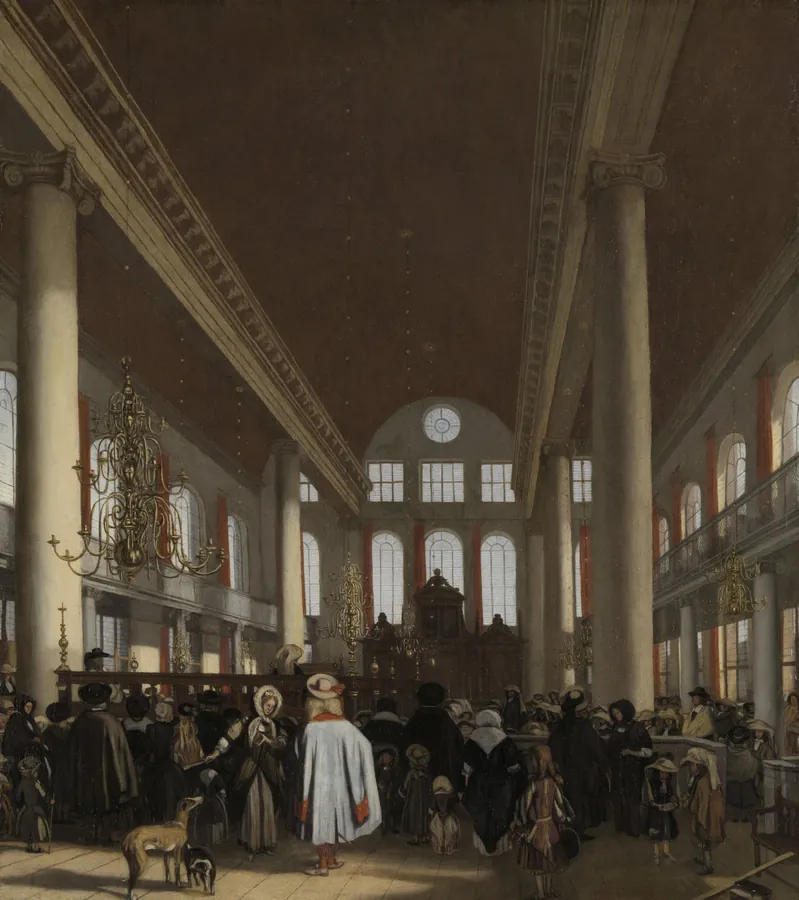
Who are the Sephardic Jews?
«Sepharad» is the Hebrew word for Spain, and Sephardim means, quite literally, «the Spanish ones.» The term covers the Jews who lived in Spain and Portugal before the expulsions, and their descendants ever since — a community with its own liturgy, its own legal traditions, its own cuisine, and its own language, Ladino.
They are usually distinguished from the Ashkenazim, the Jews of the Franco-German lands and Central and Eastern Europe, and from the Mizrahim, the Jews of the Middle East and North Africa. In practice the boundaries blur: after 1492, Sephardic exiles settled among existing Jewish communities across North Africa and the Ottoman world, and the labels have been used loosely ever since.
A thousand years in Iberia
Jews lived in Iberia since Roman times, and their fortunes rose and fell with each ruling power. Under Muslim rule in al-Andalus, roughly from the tenth to the twelfth century, Sephardic Jewish life reached a height often called the Golden Age: Jewish physicians, poets, statesmen, and philosophers wrote in Hebrew and Arabic and shaped the intellectual life of the peninsula. Moses Maimonides, the towering Jewish philosopher and jurist, was born in Córdoba in the twelfth century. Judah Halevi wrote poetry still recited today. Samuel ibn Naghrillah served as vizier of Granada.
As the Christian kingdoms advanced, the position of Iberian Jews grew steadily more precarious. In 1391, a wave of anti-Jewish riots swept Castile and Aragon; entire communities were destroyed and tens of thousands of Jews were baptised under the threat of death. That year marks the true beginning of the converso story.
1492 and the scattering
On 31 March 1492, in the newly conquered city of Granada, Ferdinand and Isabella signed the edict known as the Alhambra Decree. The Jews of Spain were given a few months to accept baptism or leave the kingdom. Estimates of how many left vary widely among historians — from tens of thousands to well over a hundred thousand — and many others stayed and converted.
Those who left went to the Ottoman Empire, where Sultan Bayezid II welcomed them and where Salonica, Istanbul, and Izmir became great Sephardic centres; to North Africa, especially Fez and Tetouan; to Italy; and later to Amsterdam, London, and the Americas. Those who stayed became conversos or New Christians — and in Portugal, where the crown ordered a forced mass conversion in 1497 rather than an expulsion, virtually the entire Jewish community became New Christian overnight.
Ladino: a language that carried the memory
Sephardic exiles took their Spanish with them and kept speaking it for five hundred years. Ladino (Judeo-Spanish, also called Djudezmo) is essentially medieval Castilian, preserved far from Spain and enriched with Hebrew, Aramaic, Turkish, Greek, and Arabic vocabulary. It was written for centuries in Hebrew characters. This project's tagline, Mos Somos Djudyos — «we are Jews» — is Ladino. The language survived Salonica and Istanbul but was devastated by the Holocaust, and today it is severely endangered.
Sephardic Jews today
Sephardic communities exist today in Israel, France, Turkey, Morocco, the United States, and across Latin America. Alongside them stands a much larger and far less visible group: the b'nei anusim, descendants of the forced converts who never left Iberia or who carried their hidden identity to the New World. Spain and Portugal have both, in recent years, opened legal routes to citizenship for documented Sephardic descendants — a formal, modern echo of 1492, though the conditions have since narrowed considerably.
Are you descended from Sephardic Jews?
Millions of people in Latin America, Spain, Portugal, and the American Southwest carry some Sephardic ancestry without knowing it. The clues are usually quiet ones: a surname, a region, a family custom nobody could ever explain, a grandmother who lit candles on Friday evening and never said why. None of these is proof on its own — but together they are a thread worth pulling. Our guide to tracing Sephardic ancestry walks through how to start.
Frequently asked questions
What does «Sephardic» mean?
It comes from Sepharad, the Hebrew name for the Iberian Peninsula. Sephardic Jews are the Jews of Spain and Portugal and their descendants.
What is the difference between Sephardic and Ashkenazi Jews?
Sephardim originate from Spain and Portugal; Ashkenazim from the Franco-German lands and Central and Eastern Europe. They differ in liturgy, pronunciation of Hebrew, customs, cuisine, and historic language — Ladino versus Yiddish.
What language did Sephardic Jews speak?
Ladino, or Judeo-Spanish: medieval Castilian preserved in exile and mixed with Hebrew, Turkish, Greek, and Arabic. It is critically endangered today.
Where did Sephardic Jews go after 1492?
Mainly to the Ottoman Empire (Salonica, Istanbul, Izmir), North Africa, Italy, and later Amsterdam, London, and the Americas. Many others remained in Iberia as forced converts.
Are there still Sephardic Jews today?
Yes — in Israel, France, Turkey, Morocco, the Americas and beyond, alongside a far larger number of descendants of converts who are only now rediscovering that history.