Crypto-Jews of Latin America and the US Southwest
From New Mexico to Mexico, Brazil and Colombia: the crypto-Jewish (Anusim) descendants of Latin America and the American Southwest and their surviving traditions.
The Inquisition did not stop at the Atlantic. Neither did the families running from it. Crypto-Jews crossed to the New World almost from the beginning — and their descendants are scattered today from Mexico City to Bogotá to the high desert of northern New Mexico, often carrying nothing more than a habit and a question.
Why the New World
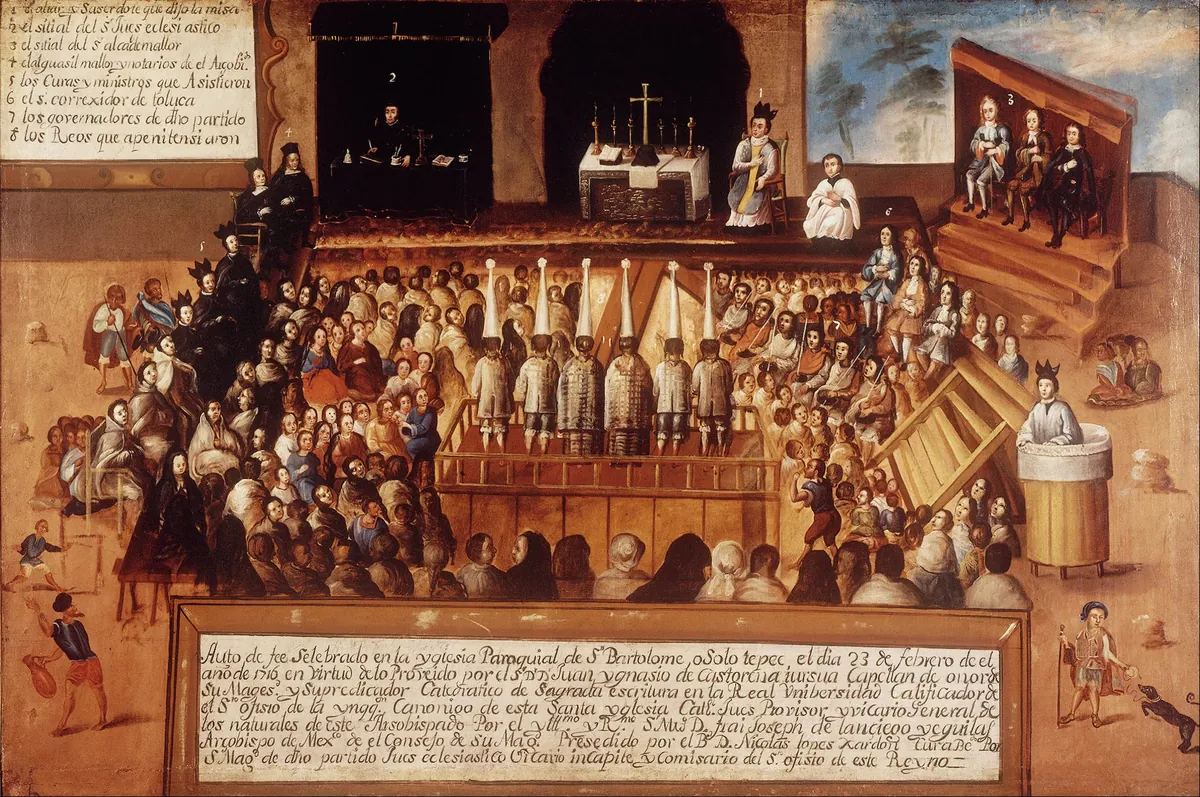
For a New Christian family under suspicion, the colonies offered distance: vast territory, thin administration, and a frontier where nobody knew your grandparents. Emigration was formally restricted for New Christians, but restrictions were evaded, and Portuguese conversos in particular moved through Brazil and the Río de la Plata into Spanish America. The irony is bitter: the Inquisition followed, establishing tribunals in Mexico City and Lima (1570–71) and later Cartagena de Indias (1610).
Mexico: the Carvajal case
The most famous crypto-Jewish story of colonial Latin America belongs to the Carvajal family. Luis de Carvajal y de la Cueva, a Portuguese-descended New Christian, was made governor of the Nuevo Reino de León in the 1580s. His extended family practised Judaism in secret; the Inquisition discovered it, and in the 1590s the family was tried, and several members, including his nephew Luis de Carvajal the Younger, were executed. The case is exceptionally well documented, and it shows both that crypto-Judaism was genuinely transplanted to the Americas and how ferociously it was pursued.
Brazil, Colombia, Peru
Brazil, as a Portuguese colony, received a large New Christian population, concentrated in the sugar economy of the northeast. During the brief Dutch control of Recife (1630–1654), some openly returned to Judaism and founded the first synagogue in the Americas — and when the Portuguese retook the city, many fled, a group among them reaching New Amsterdam in 1654 and founding what became the oldest Jewish community in what is now the United States. In Cartagena and Lima, Inquisition tribunals prosecuted Portuguese merchants as Judaizers, notably in the large Lima proceedings of the 1630s.
New Mexico and the Southwest
Northern New Mexico is the most discussed — and most contested — crypto-Jewish story in the United States. From the late 1980s, reports emerged of Hispano families in remote villages keeping practices that looked unmistakably Jewish: Friday-night candles, avoiding pork, six-pointed stars on gravestones, rapid burials. Some families traced descent from settlers of the 1598 Oñate expedition, which is known to have included New Christians.
The debate is real and unresolved, and it would be dishonest to present it otherwise. The folklorist Judith Neulander has argued forcefully that a number of these customs have other explanations — including the influence of Seventh-day Adventist and other Protestant missionary activity in the region — and that once a Jewish origin is suggested, families reinterpret ordinary habits to fit. Other researchers, and some genetic studies pointing to Sephardic-associated markers in Southwestern Hispano populations, argue for genuine continuity. Both camps have serious evidence. The reasonable conclusion is that some New Mexican families almost certainly do descend from conversos, and that not every custom cited as proof actually is.
What this means for your family
If your family comes from the Iberian world — Mexico, the Southwest, Brazil, Colombia, Peru, or Iberia itself — a converso ancestor is a genuinely plausible hypothesis rather than a fantasy. It is also one that requires evidence: the region, the surnames, the customs, and above all the records, which for Latin America are unusually rich. Our research guide shows where to begin, and a DNA test can add one more signal to the picture.
Frequently asked questions
Were there crypto-Jews in New Mexico?
Very likely yes in some families — settlers of the 1598 Oñate expedition included New Christians — but the extent is genuinely disputed among scholars, and several customs cited as evidence have alternative explanations.
Did the Inquisition operate in Latin America?
Yes. Tribunals were established in Mexico City and Lima around 1570–71 and in Cartagena de Indias in 1610, and they prosecuted conversos accused of Judaizing.
Who were the Carvajal family?
A Portuguese-descended New Christian family in colonial Mexico. The governor Luis de Carvajal y de la Cueva and his relatives were tried by the Inquisition in the 1590s for secretly practising Judaism, and several were executed.
Where did the first Jewish community in the Americas come from?
Openly Jewish life emerged in Dutch-held Recife, Brazil, in the mid-1600s. After Portugal retook the city in 1654, refugees dispersed, and a group reaching New Amsterdam founded the oldest Jewish community in what is now the United States.